Blog Content Strategy for Private Practice: Grow Your Audience Ethically

Many private practice owners hesitate to market themselves because promotion can feel pushy, even out of step with the values that led them to clinical work. I get it. I trained as a clinician too, and nobody teaches you how to sell yourself in grad school. Blogging offers a quieter path. It lets you share what you know, answer the questions real people are asking, and welcome the clients who are searching for someone like you. A thoughtful blog content strategy for private practice grows your audience while keeping your ethics intact.
Why a Private Practice Blog Needs a Strategy
Without marketing, no one will know your private practice exists. That’s a hard sentence to read, and an important one. You may be an exceptional therapist, but exceptional care can’t help someone who never finds you. Blogging is one of the most natural ways to close that gap, because it leads with information instead of promotion.
A blog content strategy for private practice isn’t about chasing algorithms or producing endless posts. It’s about creating content that’s useful, helpful, and relevant to your ideal client. When your writing answers the questions your future clients are already asking, trust forms before the first appointment ever takes place. Your blog becomes a place where people feel understood, and that feeling is what moves them toward booking.
I want to be a kind of matchmaker between clients and providers. Too many people need mental health support and struggle to connect with the right person, especially since no generic clinic can address the needs of someone with a specific specialty. A private practice blog also serves as a quiet referral engine. When a current client or colleague wants to recommend you, a well-written post gives them something concrete to share. Your expertise becomes visible, and your name stays present in the conversations people have about finding the right fit.
Define Your Ideal Client First
Before you write a word, be clear about who you’re writing for. Content that tries to serve everyone usually serves no one. This is where most practice owners get it backwards.
I took my daughter to a Savannah Bananas baseball game last summer, and their whole philosophy is “fan first.” Everything about the experience is built around the audience’s enjoyment, not the players’ egos. That idea stopped me cold, because it’s exactly what your blog should be doing. Most therapists write their websites like resumes: credentials, training, approach, all pointed inward. But your reader is sitting there thinking, can this person help me? Do they get what I’m going through? A fan-first blog speaks to your client’s world, not yours.
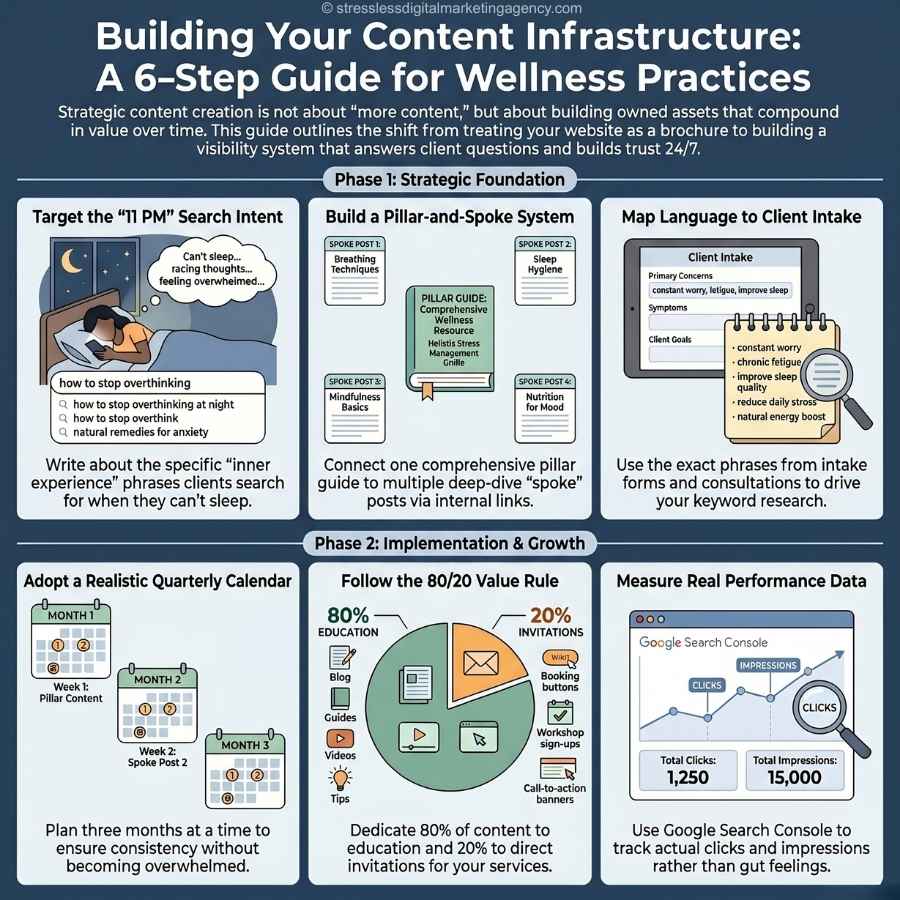
Think about your ideal client in specific terms. What stage of life are they in? What problem brought them to therapy? What do they wish someone had explained to them years ago? Having a clear ideal client makes it easier to build a content strategy for your private practice, because every topic can be measured against one simple question: will this actually help this person?
This clarity also protects your energy. When you know who you serve, you stop feeling pressure to cover every mental health topic under the sun. You focus on the conversations that matter within your specialty, and that focus reads as expertise.
Build a Realistic Six-Month Content Plan
Consistency is the reason most practice blogs fail. The solution isn’t more discipline. It’s a plan that fits your life.
I lost close to 50 pounds and have kept it off for about a year now. Before that I tried every quick fix out there. Nobody loses weight and keeps it off with a 30-day cleanse. They lose it and keep it off by changing how they eat on a Tuesday when nothing exciting is happening and they’re just hungry. SEO and content work the same way. It’s not the launch campaign or the viral post. It’s the piece you publish in month seven when you’re not sure anyone’s even reading, and the habits are what make it compound.
If you want to blog consistently, start by creating a content plan for at least the next six months, and make sure it’s achievable. Be realistic about the type of content you can create while maintaining a full client schedule. Choose a posting frequency you can sustain, and protect the time you set aside for writing the same way you protect a client hour. Simply setting aside a couple of hours a month to create and schedule posts keeps the process from becoming overwhelming.
There will be weeks where writing flows and weeks where you can barely manage a paragraph. I’ve learned to work with that rhythm instead of fighting it, in my own workouts and in my own content calendar. Plan topics in advance so you never stare at a blank page. When the plan is already made, writing becomes a matter of execution rather than decision-making. If six months feels like too much to map out, sketch three, refine them, and extend from there.
Write to Help, Not to Sell
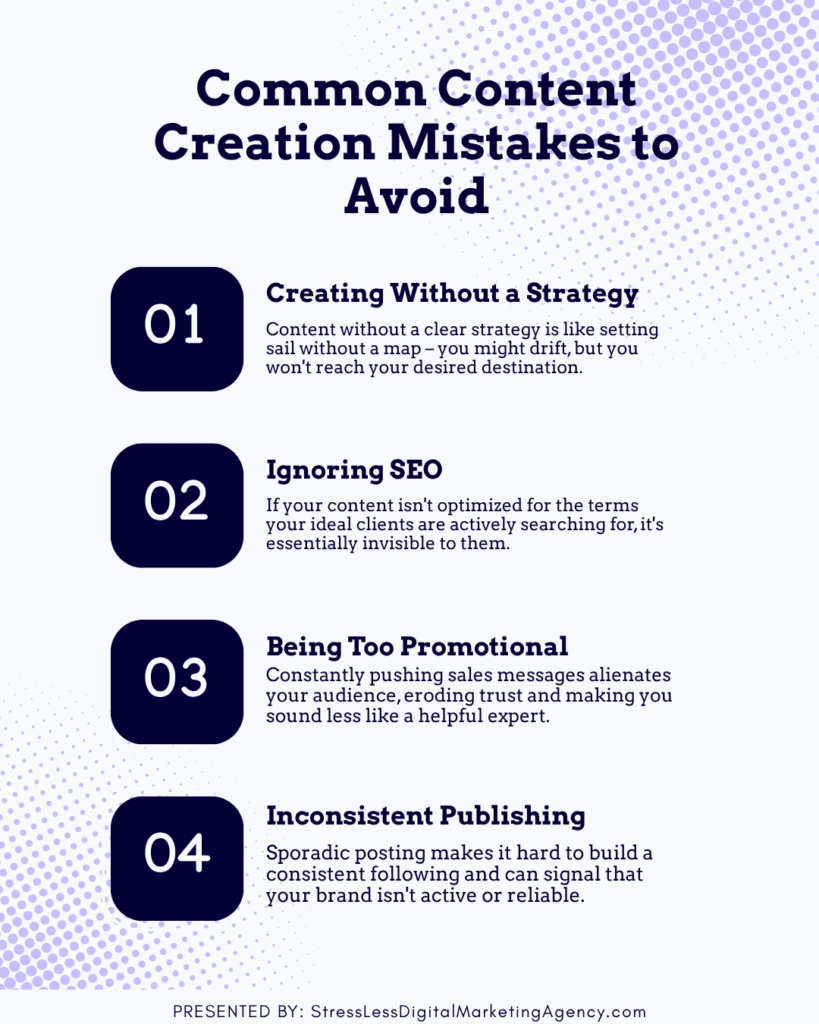
The most effective blog posts for private practice do three things: they expand your reach, showcase your expertise, and speak to your ideal client. When those three elements come together, you convert more website visitors into paying clients.
I once picked up a psychology book on my own time, purely for fun, and found myself bored stiff by page ten. The content was fascinating. The language was so clinical I needed a mental dictionary just to get through a paragraph. It hit me that this is exactly what a potential client feels reading a therapist’s website full of jargon. They just want to know how to stop hurting, and instead they’re handed a term paper.
You don’t need to sound like a marketer, and you definitely don’t need to sound like a textbook. You need to sound like a therapist who genuinely understands the human experience. Write about the topics your clients bring into session. Explain concepts in plain language. Offer perspectives that reduce shame and increase understanding. And remember, if the content isn’t about them, they’re not listening. The same is true training a dog with treats: no benefit to them, no engagement. Your readers are looking for the same thing your clients are looking for in session, which is to feel like someone finally gets it.
Ethical marketing in private practice means leading with usefulness. When readers finish a post feeling helped, they remember you. When they face a moment of need, they return to the voice that already supported them. That’s how a blog builds a practice over time. If you haven’t nailed down what that voice actually sounds like yet, the brand voice guide is worth reading before you write another word.
Repurpose Every Post Across Social Media
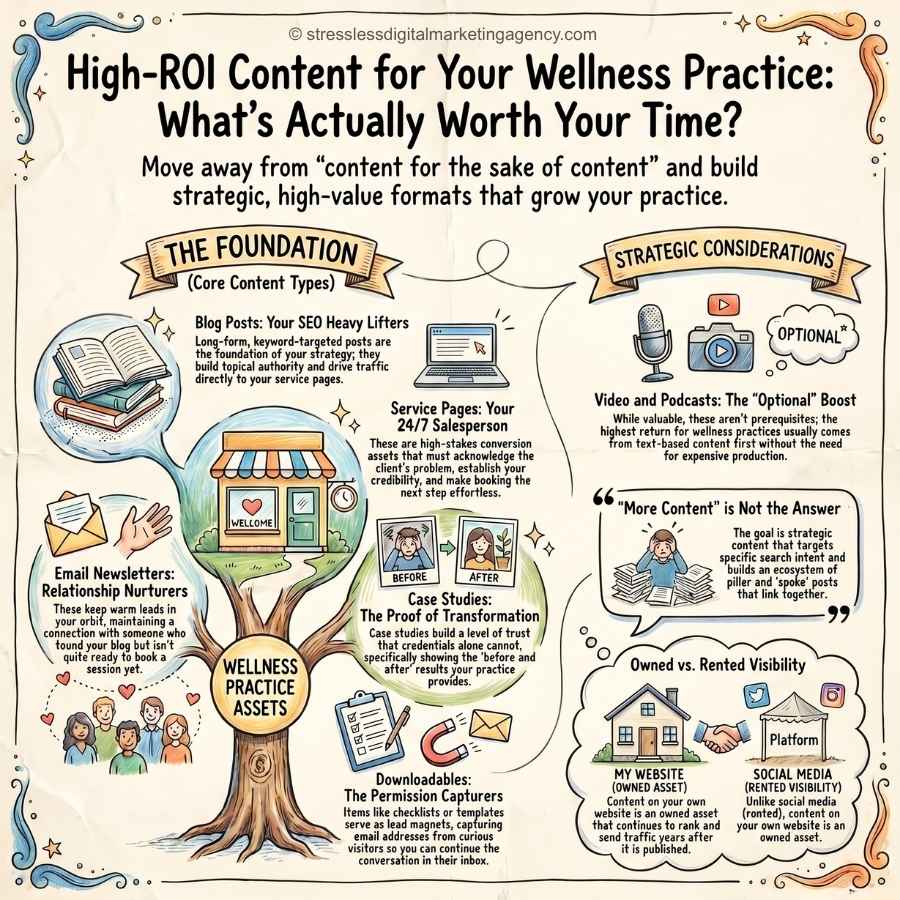
A blog post shouldn’t live only on your website. Social media is where many potential clients will first meet you, and using these platforms can lead to more engagement and, eventually, more clients. Facebook, Instagram, and similar platforms each offer a way to share your expertise with a wider audience.
Repurposing is what makes this sustainable. Turn one blog post into three Instagram graphics and a reel. Pull a compelling quote for a caption. Share a personal reflection that links back to the full article. One post becomes many pieces of content, and your message reaches people in the format they actually prefer. This is the same logic behind building a connected content ecosystem guide instead of a pile of unrelated posts. Every piece does a job, and the jobs connect.
This approach respects your time and your energy. Instead of constantly creating something new, you extend the life of the thoughtful work you’ve already done. If sitting down to write still feels like staring down a wall, you’re not alone. Writing anxiety shows up in practice owners more than anyone admits out loud, and it’s worth naming before you assume the answer is simply outsourcing everything.
Let SEO Connect Your Blog to the Right Readers
Blog posts for private practice are a proven way to attract clients, improve SEO, and help convert website visitors into leads. Search engines reward websites that consistently publish relevant, useful content. Every post is an opportunity to be found.
I learned this firsthand. After months of getting almost no calls with a Psychology Today profile that read like a wanted ad, I stopped writing like a resume and started writing like someone who knew exactly who she helped. Within seven days, I had calls. Not because I was suddenly more qualified, but because the right people finally saw themselves in what I wrote. That’s the whole job, and it applies just as much to a blog as it does to a directory profile.
To strengthen that connection, optimize your website with the same care you give your writing. Make sure your pages are clear, your services are easy to find, and your contact path is simple. Use the language your ideal clients actually use. If they’re searching for help with anxiety in new parents or support for couples after infidelity, those phrases belong in your content. You’re not manipulating search engines. You’re making it easier for the right people to find exactly what they need.
Marketing Can Feel Ethical and Comfortable
Marketing your private practice doesn’t have to feel pushy, salesy, or overwhelming. If you’ve worried about promoting yourself, you’re not alone. Many clinicians carry the same concern, and honestly, so did I.
Clinical training teaches you to be a blank slate: stay neutral, don’t share, let the client lead. That’s excellent therapy. It’s a disaster for marketing. Your ideal client isn’t in your office yet. She’s on Google at 11pm, reading five different therapist websites that all say the exact same thing about being warm and welcoming. Blogging offers a way to have a point of view without abandoning your clinical values, and that’s what makes it feel comfortable in a way that cold outreach or aggressive ads never will.
When you create content that’s useful, helpful, and relevant, you’re practicing a form of outreach that mirrors your clinical values. You’re not convincing people they need help. You’re offering clarity, reducing stigma, and showing that care is available. That’s marketing you can feel good about. And if some of it feels like more than you can build alone, there’s no shame in getting help with the parts that aren’t your zone of genius. I hired a dog walker once when I couldn’t keep up with my own dog’s needs, and I remember feeling embarrassed about it before I remembered the point was never whether I could technically do it myself. It was whether it got done.
Your blog content strategy for private practice should reflect your voice and your boundaries. Start with a clear ideal client, build a realistic plan, and publish content that genuinely helps. Growth will follow at the pace that feels right for you.
Want the Templates So You’re Not Starting From Scratch?
If the plan makes sense but the blank page still feels heavy, grab the free blog templates for service providers. They’re built specifically for health and wellness clinicians, so you’re filling in the blanks instead of staring at them.
For a fuller look at what to do with your services and pricing once your content strategy is in place, download the price and services guide.
Frequently Asked Questions
These are the questions private practice owners ask most often when they begin building a content plan for the first time.
How often should I post to my private practice blog?
Aim for consistency rather than volume. A monthly post that you can sustain is more valuable than a weekly schedule you abandon after a few months. Set aside a couple of hours each month to write and schedule in advance. A six-month content plan keeps you organized without demanding daily attention.
What kinds of topics should a private practice blog cover?
Choose topics that are useful, helpful, and relevant to your ideal client. Common questions from sessions, explanations of your therapeutic approach, and honest discussions about mental health concerns all work well. Each post should speak clearly to the specific person you want to reach. If a topic would genuinely help that person, it belongs on your blog.
Can blogging really bring in new clients?
Yes. Blog posts written for your private practice can attract clients, improve your SEO, and help turn website visitors into leads. When people search for support and find your thoughtful answer, they begin to trust you before ever contacting you. Blogging also gives existing visitors a reason to return and refer others to your site.
Do I need every social media platform?
No. Choose platforms where your ideal clients spend time, whether that’s Facebook, Instagram, or somewhere else entirely. Social media for your private practice can lead to more engagement and eventually more clients, but only if you’re not spread too thin. Focus on one or two platforms and repurpose your blog content so each post reaches a wider audience without doubling your workload.
A blog content strategy for private practice works best when it feels sustainable and true to who you are. You don’t need to publish constantly or imitate other clinicians. You need to know your ideal client, plan ahead, write useful content, and share it generously. Over time, those consistent efforts make your practice visible to the people who need you most, and they’ll arrive already knowing that you understand them.
Keep Reading:
- SEO for therapists — the no-fluff guide to getting found on Google
- Copywriter for SEO — what it is, what it costs, and when it’s worth it
- Brand voice for service providers — build the foundation before the content
- Content ecosystem guide — build the system, not just the posts
- How much time outsourcing saves — the honest math
- How I wrote one affiliate post that earned $10K — and what made it work