[Case Study] How I Wrote One Affiliate Blog Post That Brought In Over $10K (And Counting)

And How You Can Start Writing Killer Affiliate Content That Converts Like Crazy
Let me tell you what that blog post actually was.
It wasn’t a flashy product launch. It wasn’t a trendy tool that everybody in the marketing world was talking about. It was a detailed, honest review of a billing platform I used every single week when I was running my own therapy practice — a platform my colleagues kept asking me about in peer consultation groups, in Facebook threads, in casual conversations after CE trainings.
The questions were always the same: Is it actually worth switching? What’s the payout really like? What happens when an insurance claim gets rejected? Does it actually save time?
I was answering those questions manually, repeatedly, in the same places. At some point I realized I should write the answer down once and let it work for me indefinitely. So I did. That post has now earned over $10,000 in affiliate income — not because I’m a marketing genius, but because I was a therapist who understood exactly what other therapists needed to know before making a decision that affected their practice and their clients.
That result didn’t come from a single stroke of luck. It came from having a content strategy foundation already in place — a site that was publishing consistently, building topical authority, and earning the kind of search traffic that made one well-written post visible to exactly the right people.
That context is everything. And it’s what most affiliate marketing advice completely misses.
Why Affiliate Reviews Hit Differently When You’re a Licensed Clinician
Most advice about writing affiliate posts is written for general content creators. It assumes your audience is choosing between two software subscriptions with no particular stakes attached.
A therapist’s audience is different. The people reading your affiliate review are making decisions about tools that affect how they get paid, how they protect client data, how they communicate across systems, and how they manage the infrastructure their clinical work depends on. Those are not low-stakes purchase decisions. They carry professional weight.
That changes everything about how the post needs to be written.
Your credibility is a clinical asset here, not just a marketing one. When a therapist reviews an EHR platform, they’re not just another blogger with an affiliate link. They’re a clinician who has used the tool in a real clinical setting, who understands HIPAA implications, who has navigated an insurance rejection with this specific software, and who can speak to how it holds up under actual practice demands. That firsthand professional credibility is something no general content marketer can fake — and it’s exactly why your review will convert when theirs won’t.
The trust stakes are higher. Therapists who read your review trust you professionally before they trust you as a content creator. That’s an enormous advantage. It’s also a responsibility. An inauthentic or poorly researched review doesn’t just underperform — it can erode the professional trust your audience extends to you. This is why “choose something you actually use” isn’t just an affiliate marketing platitude for therapists. It’s an ethical operating standard.
FTC disclosure and ethics board overlap. Standard FTC affiliate disclosure requirements apply to everyone. For licensed clinicians, there’s an additional layer worth being aware of: many licensing boards have guidelines about endorsements and testimonials that may touch on how you frame affiliate recommendations publicly. This isn’t a reason to avoid affiliate content — it’s a reason to write it with the same care and specificity you bring to clinical documentation. Disclosure, accuracy, and transparency are the standards that protect both your audience and your license.
What Affiliate Products Actually Make Sense for Therapists
This is the piece most general affiliate marketing guides skip entirely, because they don’t know your world well enough to answer it specifically.
Here are the categories that produce the most reliable affiliate income for health and wellness practice owners — and the ones with the best alignment between your professional credibility and your audience’s real needs:
Practice management and EHR platforms — SimplePractice, TherapyNotes, Alma, Headway, and similar platforms all have affiliate or referral programs. Therapists switching platforms are making a considered, high-stakes decision. A detailed, honest review from a clinician who has actually used the platform — including real talk about billing quirks, insurance lag times, and support quality — is exactly what that audience is searching for.
Bookkeeping and financial tools — Heard, QuickBooks for therapists, and similar platforms solve a genuine problem for private practice owners who didn’t go to business school. A review that explains the bookkeeping challenges specific to private practice (quarterly estimated taxes, tracking insurance payments, separating personal and business finances) from someone who has navigated them personally carries enormous credibility.
Insurance and credentialing platforms — Headway, Alma, Grow Therapy, and similar panels that help therapists get credentialed and find clients have significant affiliate programs. Your experience actually joining and using these platforms — including the realistic wait times, payout structures, and clinical fit — is information other therapists cannot find clearly anywhere else.
Continuing education platforms — CE platforms, supervision tools, and professional development resources your peers are already spending money on annually.
Clinical tools and apps — Telehealth platforms, scheduling tools, client communication apps, HIPAA-compliant messaging systems. Any tool your clients interact with through you is a tool your peers are evaluating.
The common thread: every category above involves your peers making decisions that require professional context to evaluate correctly. That’s your competitive advantage as the writer.
The Numbers Behind the $10K Post (And the One That Followed)
I want to show you the actual data, not just the headline number — because the details tell a more useful story than the total.
The Headway review post I mentioned in the intro has been live since 2023. Here’s what the performance looks like in real terms.
In Google Analytics for 2025 alone:
- 7,575 page views
- 6,379 active users
- 1 minute 48 seconds average engagement time — meaning people are actually reading it, not bouncing
That made it the single most-viewed page on the entire site, representing 16% of all traffic across 321 pages. One post. Still running.
In Google Search Console over the same 12 months:
- 873 clicks specifically from the search query “headway reviews”
- 24,000 impressions for that query
- Average position 7.4 — sitting on the first page of Google for a competitive, high-intent search term
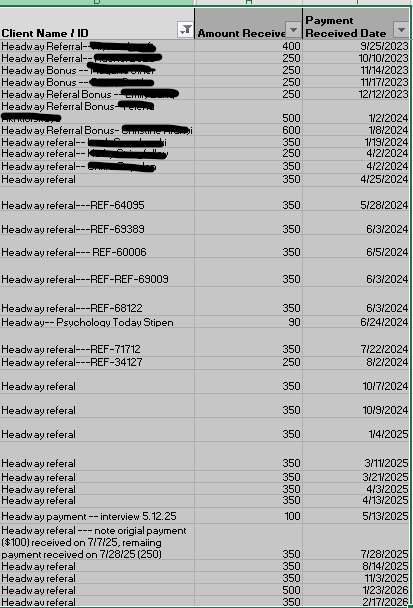
Those aren’t vanity metrics. Every click represents a therapist actively researching Headway before making a credentialing decision — the highest possible purchase intent. And the income that came from those clicks is documented line by line in my payment records: referral payments ranging from $250 to $600 per signup, from September 2023 through early 2026, totaling well past the $10K mark.
The Headway post was the first. It wasn’t the last.
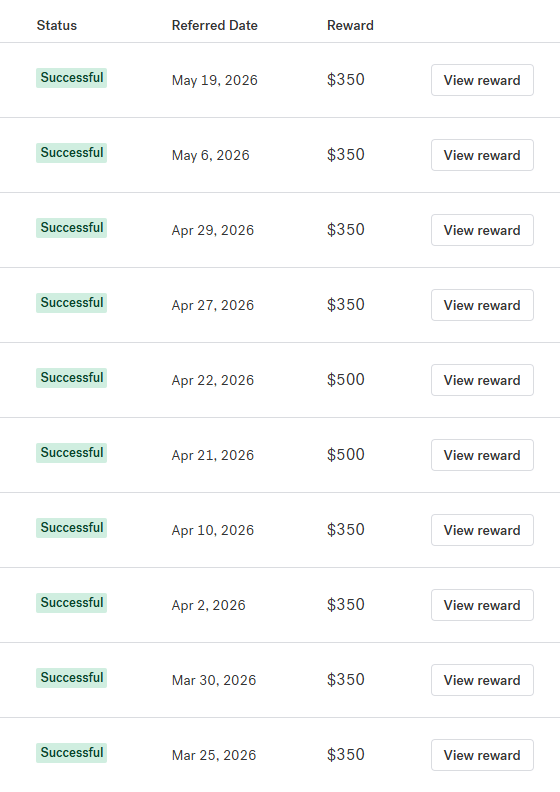
After I saw what a single well-written, clinically specific affiliate review could do, I wrote a second one — a review of Alma, another insurance credentialing panel — using the exact same framework. The Alma post generated 3,222 views and 2,788 active users in 2025 alone, with 412,000 search impressions and nearly 2,000 clicks over the same period. The Alma referral bonuses ran from $500 to $2,000 per signup. Several entries in the payment records show four-figure individual referrals.
Two posts. Both still earning. Neither required ad spend, a social following, or any additional effort after they were published.


What the data actually proves
This is not a one-time fluke or a niche that happened to be underserved. The pattern holds because the mechanism holds: a clinically credible, honestly written, keyword-researched review of a tool your peers are actively evaluating will rank, earn trust, and convert — for years. The compounding quality is real and it’s visible in the traffic charts. Both posts show consistent daily traffic with no significant drop-off. The Headway post peaked in early 2025 and stabilized; it did not collapse after the initial spike the way social content does. The Alma post shows remarkably even traffic across the full calendar year.
One more number worth noting: the Headway post’s average engagement time of 1 minute 48 seconds is not an accident. People reading this post are not skimming. They are doing research, and the post is meeting them where they are with enough specific, clinical, firsthand information that they stay. That behavioral signal is part of why the post has maintained its search position. Google reads dwell time as a quality signal. Your audience reads it as a trust signal. When those two things point in the same direction, the post keeps working long after you’ve moved on.
This is what one affiliate review post can build. Two if you’re paying attention.
What Actually Makes a High-Converting Affiliate Review Post
Most affiliate posts fall flat for one of three reasons: they’re too promotional, too vague, or they’ve been written by someone who doesn’t actually know the product from the inside. Here’s what separates the posts that convert from the ones that collect dust.
Step 1: Choose the Product Based on Real Use, Not Commission Rate
The review that earned $10K was not the highest-commission product I could have written about. It was the one I knew most thoroughly from daily clinical use — the one I had genuine opinions about, including frustrations, workarounds, and specific features I’d come to rely on.
Ask yourself before choosing a product: Would I still use this if there were no affiliate program? Can I answer specific technical questions about it from memory? Do I have an opinion about who it’s actually right for — and who it isn’t? If the answers are yes, you have material for a post that converts. If you’re reaching for a justification, keep looking.
Step 2: Research What Your Peers Are Actually Asking
Your personal experience is the foundation — but the research layer is what makes the post rank and converts the readers who aren’t already in your network.
Here’s where to look for the real questions your audience is Googling:
- Facebook groups for therapists in private practice (search the platform name and read the comment threads — not the posts, the comments, where the real concerns surface)
- Reddit — r/therapists and r/psychotherapy have remarkably candid discussions about billing, platforms, and practice tools
- “People Also Ask” on Google for the platform name
- Answer Socrates for question clusters around the product name
- YouTube reviews — watch the negative ones specifically, because the criticisms you can address or contextualize are the most valuable content you can add
You’re not mining for problems to sweep under the rug. You’re finding the exact objections and uncertainties your reader brings to the page — and your review is the place you address them directly, in your clinical voice, with real context.
Step 3: Establish Why Your Perspective Specifically Matters
This is the step most affiliate post advice rushes past, and it’s the one that does the most conversion work for a clinician.
Your reader is not looking for a generic product overview. They can get that from the platform’s own website. What they’re looking for is the answer to “would this work for someone in my exact situation?” That means your credentials, your clinical context, and your specific use case are not just nice-to-have — they’re the reason to trust your review over every other one.
For my Headway review, I explained upfront that I was a solo therapist managing my own billing, navigating insurance panels for the first time, and specifically concerned about how rejections would be handled. That context told my reader exactly who the review was written for. It made the specificity that followed feel earned rather than arbitrary.
If you’re a group practice owner reviewing a platform for multi-clinician scheduling, say so. If you’re a trauma specialist evaluating an EHR for its EMDR session note templates, say so. The more specifically you locate yourself in the review, the more precisely your ideal reader sees themselves in it.
When I take on an affiliate post project, we start with a structured brief — a deep-dive into your clinical context, your audience’s specific concerns about the product, and the voice that will make the review feel unmistakably like you. Fill out this form if you’re ready to get started.
Step 4: Make It Visual
Screenshots, dashboard walkthroughs, and feature-specific images do two things: they give your reader a preview of what they’re committing to, and they signal to Google that your review is substantive and specific rather than generic.
For the billing platform review, I included screenshots of the actual payment interface, the claim submission workflow, and the reporting dashboard. Readers could see exactly what the day-to-day experience looked like before they ever signed up. That specificity built confidence in a way that descriptive text alone can’t.
Practical guidance: use your own screenshots from your actual account rather than stock images from the platform’s marketing materials. Authentic, slightly imperfect real-use images outperform polished marketing screenshots every time because they signal genuine use rather than promotional content.
Step 5: Use This Proven Structure
This is the exact framework I use for every high-converting affiliate review:
- Hook + Credibility Context — What the product is, who you are in relation to it, and why your specific clinical experience makes this review trustworthy
- The Problem It Solves — What specifically drove you to this product, framed in the language your peers use to describe that problem
- Quick Overview — What it is, who it’s built for, what it does at a high level
- Your Real Experience — How you’ve used it, for how long, in what clinical context, including the learning curve
- Feature Breakdown — Specific features with honest assessments of each, including ones you don’t use and why
- Honest Pros and Cons — The cons are where trust is built. The workarounds and limitations, explained without apology, signal that you’re giving them the real picture
- Who It’s Right For (And Who It Isn’t) — The clinical fit question, answered specifically
- Frequently Asked Questions — Built from your peer research in Step 2; this is the section that earns search traffic
- Final Verdict + CTA — Clear recommendation, clear affiliate link, clear next step
Step 6: Place Affiliate Links Strategically Throughout
The affiliate link should appear in multiple places:
- In the introduction, anchored to the product name
- After the quick overview section
- After the pros and cons section
- In the final verdict as a button
- As a clickable featured image
- Under screenshots
The disclosure should appear at the top of the post and again near the primary CTA buttons. For a clinician, the disclosure language matters beyond legal compliance — your readers will respect the transparency, and it actually increases trust rather than undermining it.
Step 7: Write at Depth, Not Length
My highest-converting affiliate posts are between 1,500 and 2,500 words — not because length is the goal, but because genuine depth takes that many words to achieve. A 600-word affiliate post that summarizes features is not an affiliate review. It’s a press release with a commission link.
The depth that earns conversions and ranks in search comes from: answering every real question your peer might have, addressing the objections that would stop them from clicking, and providing enough clinical context that the recommendation feels specific rather than generic. That happens at 1,500 words minimum for a tool with any meaningful complexity.
Step 8: Promote It as a Resource, Not a Post
Once it’s live, an affiliate post should be promoted with the same intention you’d bring to a clinical resource — because that’s what it is.
Here’s how I drive consistent traffic to affiliate posts:
- Pinterest — graphic with direct link to the post; Pinterest indexes affiliate reviews well
- Email newsletter — framed as a resource for peers with a specific challenge, not as a promotional send
- Instagram — carousel summarizing the top three things your peers want to know before committing
- Internal links from every related post on your site — every post about practice management, billing, or private practice tools should link here
- SEO title and meta description optimized for the exact question your peers are searching (use Rank Math or Yoast)
For video amplification, I use Descript (affiliate link) to create short walkthroughs linked back to the review.
The 3 Mistakes That Tank an Otherwise Good Affiliate Review
1. Writing Only the Good Parts
Your reader assumes you’re going to say positive things — you have a financial incentive to do so, and they know it. The thing that earns trust is the opposite: the honest assessment of limitations, the features that fell short, the workaround you developed for the thing that doesn’t work quite right. Addressing the negative directly, in your clinical voice, with real context for how you navigated it, is what separates a credible review from a promotional post.
2. Making the CTA Hard to Find
If your reader finishes the review and has to hunt for where to sign up, you’ve lost the conversion at the moment of highest intent. The link should be impossible to miss — as a button after the verdict, as inline text after key features are described, as a clickable image. Every screenshot should be linked. Every major transition point should have a clear path to the affiliate URL.
3. Picking the Product for the Commission Rate
One well-researched, clinically grounded, honest review of a product you use daily will outperform five posts about products you chose because the commission was attractive. Your professional credibility is the differentiating asset — don’t dilute it by lending it to products you can’t speak to from real experience.
Why This Specific Post Type Needs More Than a DIY Framework
Here’s the honest part I’d be doing you a disservice to leave out.
The framework above works. It’s what I used on the post that earned $10K, and it’s what I use for every affiliate post I write. But executing it well — capturing the right clinical voice, researching the specific peer objections, structuring the conversion path correctly, and optimizing every SEO element — takes a level of craft and strategy that most therapists don’t have time to develop while also running a practice.
There are two things happening in a high-converting affiliate review for therapists that have to work simultaneously: the clinical credibility layer (the professional voice, the contextual specificity, the honest assessment that makes a licensed clinician trustworthy) and the conversion psychology layer (the structure, the objection handling, the CTA placement, the SEO architecture that brings the right reader to the page in the first place). Getting both right at the same time is a specialized skill.
I have a clinical background, and I write conversion copy. That’s not a common combination, and it’s exactly what this post type requires.
For a deeper look at how affiliate income fits into a broader blog monetization strategy for health and wellness providers, that post covers the full picture — affiliate marketing alongside digital products, client attraction, and partnerships.
If you have a product or platform you want reviewed, and you want it written correctly — researched, clinically grounded, SEO-optimized, and built to convert — let’s talk about what that looks like.
Free resources:
- Quiz: What’s Keeping You Stuck With Marketing?
- [Freebie] Stop Panicking When Clients Graduate
- Free Blog Templates for Health & Wellness Providers
Keep reading:
- 5 ways to monetize a blog as a service provider — affiliate marketing alongside four other income streams
- Complete Interact quiz review — a live example of what a high-converting review looks like
- Content consistency for practice owners — keeping the posts coming
- How outsourcing content saves time — the time math behind delegating this
- Ultimate guide to content creation — the full content strategy picture