3 Ways Your Blog Will Boost SEO and Client Bookings

A blog can look like one more chore on a calendar already crowded with sessions, notes, and consultation calls. Then someone tells you it will boost SEO, and the advice sounds like a problem that belongs to somebody else’s job description. Here’s the reframe worth holding onto: a blog is the only part of your website that can answer new questions every month without a full redesign. That’s exactly what makes it useful to search engines, and to the person quietly deciding whether to call you.
SEO, short for search engine optimization, comes down to two things. It helps search engines understand your content and helps people find your site and decide. Both halves matter. A post that ranks but leaves the reader with nothing to do is just traffic. A post that helps someone feel understood can end in a consultation request. The sections below cover how a blog supports the first half, and how the same posts handle the second.
What a Blog Really Does for SEO
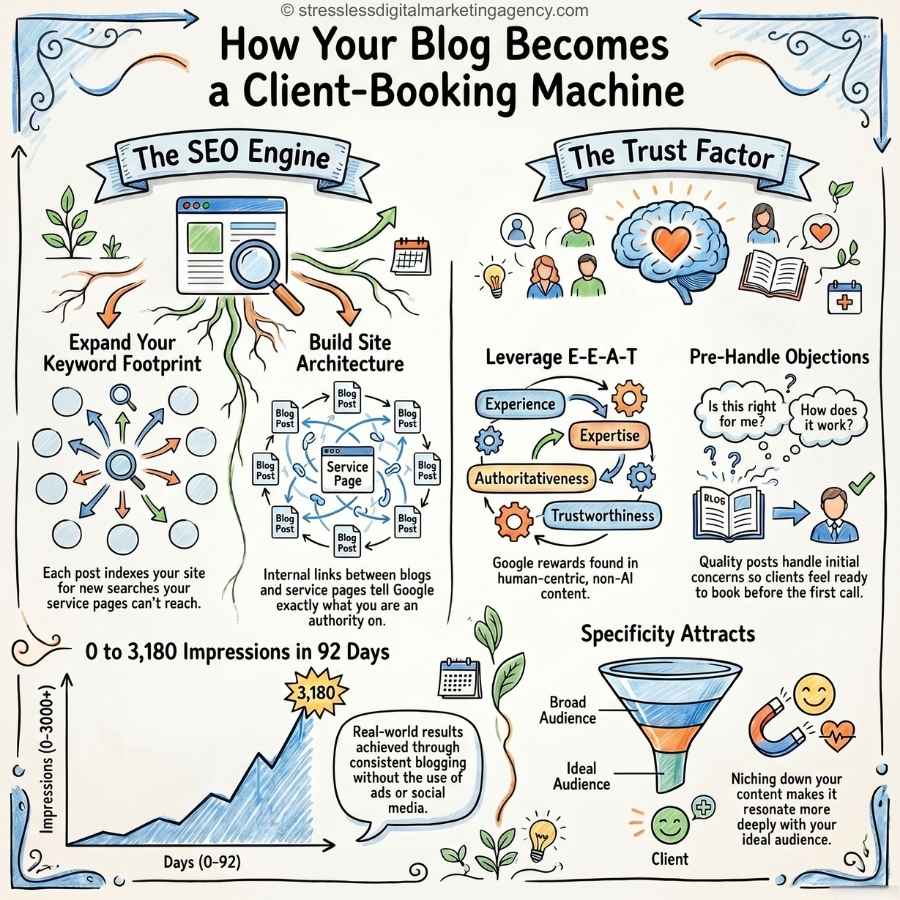
Standard SEO guidance tends to circle the same three moves: set a strategy, publish relevant, authoritative content, and update it on a schedule. For a private practice, a blog is the most practical place to do all three without hiring a developer or rebuilding your site from scratch.
Think about what you have that a general marketing agency doesn’t. You understand how anxiety shows up in a first session. You know the difference between someone seeking couples work and someone seeking individual work. You know the language clients use when they’re nervous. That lived understanding makes content authoritative, and authority is what search engines try to measure when they decide which pages to show.
I remember finishing grad school with a full clinical toolkit and absolutely nothing else. Nobody taught me how to explain what I do to a stranger scrolling on their phone at midnight, let alone how a search engine decides which website gets seen. That blank slate is the norm, not the exception, for most clinicians. The clinical training builds the expertise. It just doesn’t build the words that help people find that expertise.
Your blog also gives you something a service page can’t: room to answer a single question properly. Service pages have to cover everything you offer. A blog post can go narrow, and narrow is usually where visibility starts.
Way 1: Your Blog Answers the Questions People Search Before They Book
Most people who eventually call a therapist ask several private questions first. They wonder whether their situation is serious enough. They wonder what a first session involves. They wonder how to tell whether a provider is the right fit. None of those questions get typed into a contact form, but plenty of them get typed into a search bar.
Target the terms your clients actually use. In practice, that means writing down the phrases a worried person would search at 11 p.m., not the clinical terms you’d use in a treatment plan. If your ideal client would never type a phrase, a post optimized around that phrase won’t reach them, no matter how well it’s written. Keep a running note on your phone. Every time a client says something in session that sounds like a search query, add it to the list. Over a few months you’ll have a keyword list no tool can sell you, because it came straight from your own caseload.
Prioritize readability over keyword density. I used to write the way my psychology textbooks trained me to: dense, qualified, full of the kind of language that sounds credible in a case conference and completely alienates someone who just wants to know if what they’re feeling is normal. Search engines can parse that kind of writing fine. Humans bounce off it. Short paragraphs, plain sentences, and headings that describe what the next section covers help readers stay long enough to finish the post and click through to your services page. Readability also serves accessibility. Someone reading on a phone between appointments, or someone who’s already anxious, benefits from clear structure. That’s not a technical trick. It’s good clinical communication applied to a web page.
Question-based posts build trust before the first call. A post built around a real client question does something a service page can’t. It shows, in advance, how you think. A prospective client who reads your explanation of what a first session looks like arrives at the consultation already a little calmer, and a calmer prospect is easier to schedule.
Way 2: Your Blog Gives Search Engines a Reason to Return
Updating your content on a schedule shows up on nearly every credible SEO list, and it’s the part most practice owners skip. A site with a services page written three years ago and nothing since looks static to a search engine. A site with new or refreshed content looks maintained.
Fresh content signals an active practice, but freshness isn’t the same as frequency. Semrush’s own research team makes an important distinction here: fresh content matters most for topics where searchers genuinely want the newest information, and it can come from an old page that got updated just as easily as from a brand new post. You don’t need to publish constantly to benefit. What matters more is that new, relevant material keeps appearing and old material keeps getting reviewed. A quarterly review of your existing posts, where you update a resource, fix an outdated reference, or expand a thin section, does real work for your rankings and costs far less time than writing from scratch.
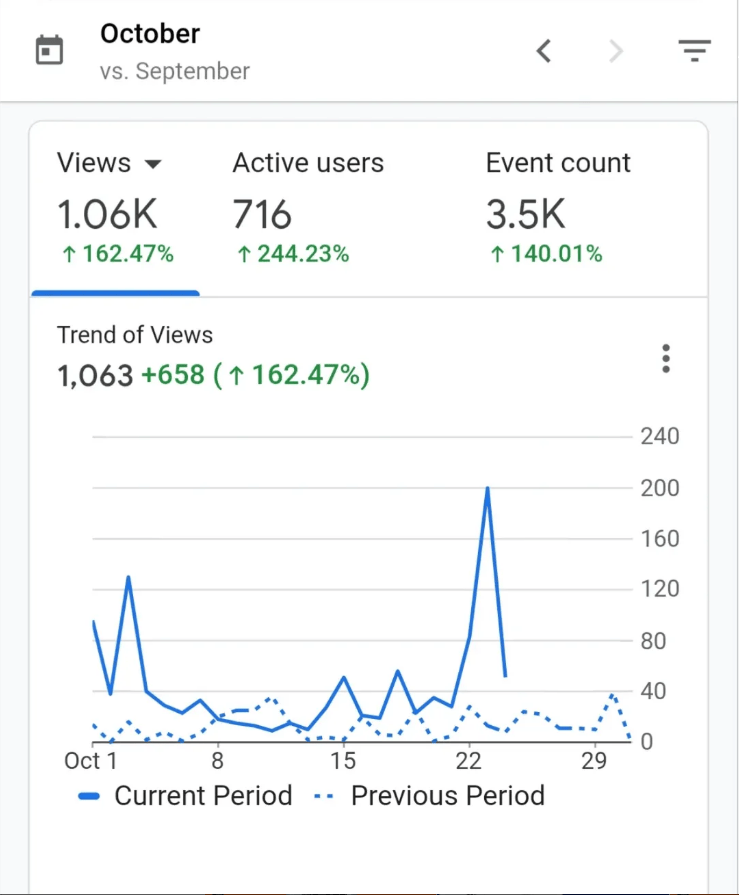
I’ll admit I’ve made the mistake of checking Google Search Console the way some people check their phone the second they wake up, refreshing rankings and spiraling over a two-position drop that meant nothing in the long run. What actually moved the needle wasn’t obsessive checking. It was showing up on a schedule I could sustain and letting the data settle before I reacted to it.
Evergreen posts keep working while you see clients. Evergreen content is material that stays useful over time. A post explaining how to prepare for a first therapy session will still be relevant next year. A post about a one-time community event won’t. Ahrefs describes evergreen content as the backbone of a sustainable content strategy precisely because it keeps earning traffic long after the publish date, as long as it gets refreshed rather than left to go stale. Leaning toward evergreen topics means the hours you spend writing keep producing value long after the post goes live. Evergreen doesn’t mean untouched. It means the core question doesn’t expire, so a light update keeps the post competitive rather than forcing a full rewrite.
Unique titles, descriptions, and URLs do quiet work. Two habits are worth building early. First, choose readable URLs that describe the page in a few words. Second, write a unique title and meta description for every post. When every blog post shares the same title tag or a generic meta description, you make it harder for search engines to tell your pages apart, and harder for a searcher to know which one to click.
Way 3: Your Blog Turns Readers Into Booked Clients
Traffic isn’t the goal. A full caseload is. The third way a blog boosts SEO is by giving you a place to convert the attention you’ve already earned.
Every post is a landing page for one concern. Someone who finds your post about workplace burnout is telling you something specific about their life right now. That post can end with a relevant next step, an invitation to book a consultation, or a link to your services page for individual therapy. The relevance is what converts. A generic “contact us” button at the bottom of a general interest article asks the reader to make the connection themselves, and most won’t bother.
Speed and mobile experience decide whether they stay. Mobile optimization is a standard SEO practice, and it matters more for a practice website than for many industries, because people research providers on their phones. Page speed is part of that experience. Large image files are a frequent culprit, and image compression tools can shrink a whole batch of photos in minutes so pages load faster.
Give the reader one clear next step. Conversion copy works best when it asks for a single thing. A post about anxiety in new parents might point to a consultation. A post about couples communication might point to a free phone call. Decide the one action each post is asking for based on what the reader just read, then write the closing lines around that action instead of tacking on a list of links.
A Weekly Rhythm That Keeps a Blog Productive
- Consistency beats intensity here, and the habits are small.
- Publish one new post, or make one substantial update to an existing post.
- Review that post’s title tag, meta description, and URL to confirm they’re unique and descriptive.
- Compress any new images so the page stays fast.
- Add one line of internal direction, such as a link from the post to the most relevant service page.
- Note any client phrasing you heard this week that could become a future topic.
The scale changes depending on the size of your practice, but the underlying pattern holds no matter who’s writing: publish consistently, keep pages current, and stay responsive to what’s actually working.

What to Do When You Don’t Have Time to Write
Most clinicians who read this far already know the value of a blog and still won’t have the hours to build one. Writing well for search takes a specific mix of skills, keyword research, structure, readability, and conversion copy, plus a clear sense of how a prospective client thinks. That’s a different job from being an excellent therapist, and trying to do both alone is how blogs stall out after three posts.
Outsourcing works when the writer already understands your field. A copywriter who knows the language of private practice and health and wellness content can write posts that sound like you, follow an actual strategy, and point readers toward the right next step. The best setup is usually a short interview or questionnaire, a batch of posts planned around real client questions, and a review cycle where you sign off on clinical accuracy before anything goes live.
That’s exactly what I built the SEO and blog strategy chapters of Stay Booked to walk you through, the pillar-and-spoke structure, the readability rules, and the way one blog post should always point back to a service page instead of just sitting there. Download Chapter 1 of Stay Booked free and see the framework for yourself before you decide whether to build it alone or hand it off.
What matters most is that the blog isn’t treated as a decorative extra. It’s the part of your site that earns visibility for questions you’d otherwise never appear in, builds trust with people who are still deciding, and gives every reader a path toward booking. Set the strategy, publish relevant content, update it on a schedule, and let each post do one job well.
Frequently Asked Questions
How do you actually boost SEO for a small practice? Build a simple strategy, then publish relevant and authoritative content on a regular schedule, and update older posts instead of leaving them untouched. Give each page a unique title, description, and readable URL. Keep pages fast and mobile friendly. For a therapy or wellness practice, the fastest gains usually come from answering real client questions with clear, well-structured posts rather than chasing broad, competitive terms.
Is SEO still worth the effort for a private practice? Search remains one of the few channels where someone actively looking for help can find you without you paying for every click. The core principles haven’t changed: help search engines understand your content, and help people find your site and make a decision. Content that answers genuine questions and gets maintained over time keeps earning visibility for practices willing to publish it.
How often should I update my blog? A steady rhythm matters more than volume. One new post or one meaningful update a week is a realistic target for many solo practices, and a quarterly review of older posts keeps them from going stale. If weekly isn’t realistic, pick a schedule you can genuinely keep, two posts a month is fine, and hold to it rather than publishing heavily for six weeks and stopping.
Can I write my own blog posts instead of hiring a copywriter? Yes, and plenty of practice owners should, at least at the start. Your clinical insight is the hardest part for an outside writer to replicate, so your drafts are valuable raw material. Where outside help tends to pay off is structure, keyword research, readability, and conversion copy. Some practices write the substance themselves and bring in a copywriter to shape and optimize it before it goes live.
Do blog posts really bring in client bookings? They can, but only when each post ends with a relevant next step. A reader who finds your post about a specific concern is telling you that concern is live for them right now. Giving that reader one clear action- booking a consultation or visiting the matching service page- is what turns a search visit into a scheduled call instead of an anonymous page view.
Sources
- Pandya, R. (2024). What Is Fresh Content & Is It Important for Your Site? Semrush Blog. https://www.semrush.com/blog/fresh-content/
- Ahrefs. Evergreen Content. Ahrefs SEO Glossary. https://ahrefs.com/seo/glossary/evergreen-content